
Company-Paid, Employee-Paid or Shared-Cost Company Stores: Which Is Best?
Company-Paid, Employee-Paid or Shared-Cost Company Stores: Which Is Best?
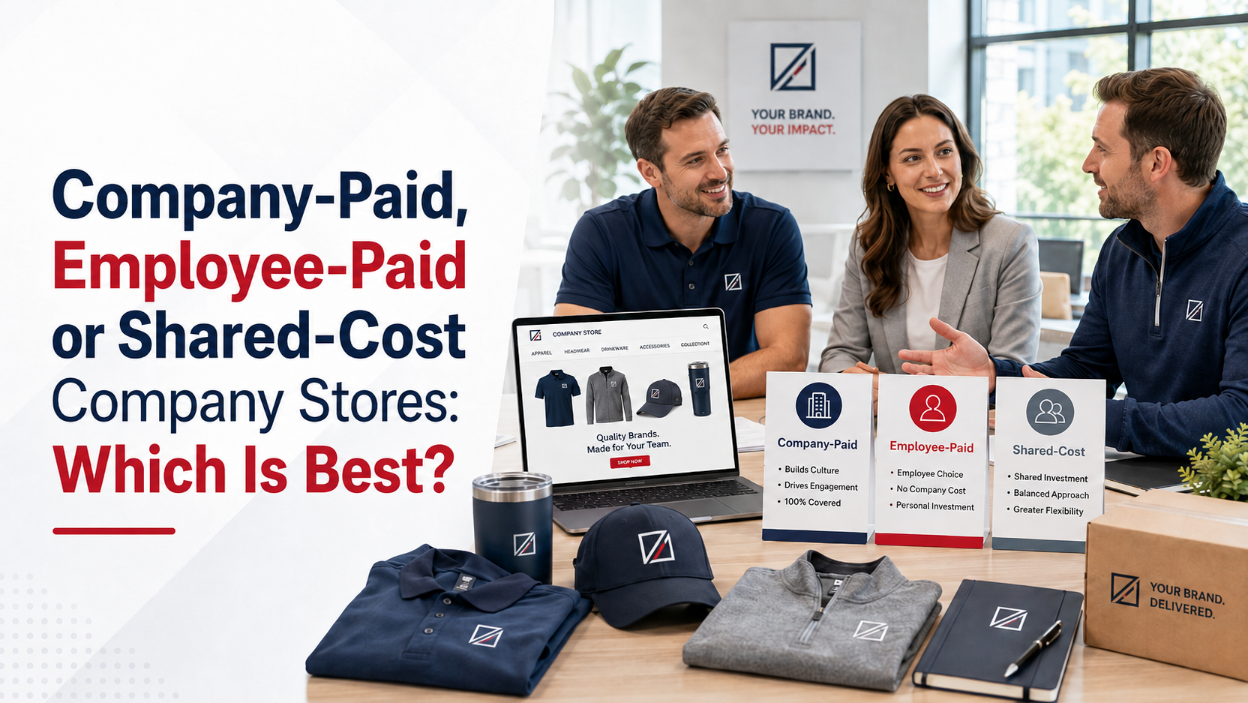
Organizations often know they want an online company store, but they may be unsure how purchases should be funded.
Should the company pay for everything? Should employees pay for their own merchandise? Should the cost be divided?
There is no single model that works for every organization. The best structure depends on the purpose of the store, the products being offered, the available budget, and the experience you want to create.
Company-Paid Stores
In a company-paid program, the organization covers the cost of approved merchandise.
This model is often appropriate for:
- Required uniforms
- Safety apparel
- New-hire clothing
- Employee recognition
- Work-anniversary gifts
- Sales incentives
- Event apparel
- Department-specific apparel
Employees may receive access to a predetermined product, a limited collection, or a company-funded allowance.
Advantages
Company-paid programs can help ensure employees receive the apparel or merchandise they need. They can also create a positive employee experience "perk" because the recipient is not required to make a personal purchase.
Considerations
The organization must establish a clear budget and determine who qualifies, how frequently benefits are issued, and what happens to unused funds or unclaimed merchandise.
Employee-Paid Stores
In an employee-paid program, users purchase optional merchandise with their own funds.
This model works well for:
- Casual logo apparel
- Spirit wear
- Extra company merchandise
- Family apparel
- Alumni or member merchandise
- Optional accessories
- Branded gifts
Employees can decide whether they want to participate and which products they prefer.
Advantages
The organization can offer branded merchandise without funding every purchase. Employees receive access to approved products while the company maintains greater control over branding.
Considerations
Products must be appropriately priced and desirable enough to generate voluntary purchases. Shipping costs and order minimums should also be considered when designing the program.
Shared-Cost Stores
A shared-cost program divides the cost between the organization and the employee.
For example, a company may cover a portion of the garment while the employee pays the remaining amount. Another option is to provide a fixed credit that can be applied toward any eligible item.
Shared-cost "subsidized" programs may be useful when:
- The company wants to encourage participation
- Employees are allowed to upgrade products
- The organization provides a basic allowance
- Users want products above the funded amount
- Optional merchandise is partially subsidized
- Premium brands are used
Advantages
The company can control its financial commitment while still providing a meaningful employee benefit.
Considerations
The payment process must be clearly explained. Employees should understand what the organization covers, what they are responsible for paying, and whether unused benefits expire.
Using Store Credits or Gift Certificates
Store credits and gift certificates can give users flexibility while establishing a maximum company expense.
An organization might provide:
- A new-hire allowance
- An annual apparel credit
- A work-anniversary award
- A wellness-program incentive
- A department-specific budget
- A holiday merchandise allowance
The employee can then apply the available value toward eligible products.
Clear program rules are important. Your organization should determine:
- Who receives the credit
- How much is issued
- When it becomes available
- Whether it expires
- Whether it can be combined with personal payment
Using Coupons
Coupon codes can be helpful for limited or one-time programs.
For example, an organization may issue a single-use coupon for a new-hire item, event shirt, or employee appreciation gift.
Coupons may be straightforward for short-term campaigns, although they may offer less flexibility than an individual store-credit balance.
Which Model Is Right for Your Organization?
Begin by identifying the primary goal of your store.
Choose a company-paid model when the merchandise is required for work or is being provided as a benefit, reward, or gift.
Choose an employee-paid model when the merchandise is optional and the organization wants to make approved products available without funding the purchases.
Choose a shared-cost model when the organization wants to encourage participation while maintaining a defined budget.
Many organizations use more than one model. Required workwear may be company-paid, optional spirit wear may be employee-paid, and new-hire apparel may be funded through a credit.
Build Clear Program Rules
Regardless of the structure, establish clear expectations before launching the store.
Document:
- Eligibility
- Available products
- Funding amounts
- Ordering deadlines
- Shipping responsibilities
- Return or exchange rules
- Product limitations
- Approval requirements
Clear rules reduce confusion for employees and administrators.
Create a Store That Fits Your Budget
IMS Branded Solutions can help organizations evaluate company-paid, employee-paid, and shared-cost merchandise programs.
Our team combines online company stores with professional product sourcing, custom embroidery, screen printing, promotional products, and fulfillment.
For a complete overview, read our guide to choosing IMS Branded Solutions for your company logo merchandise store.
Contact IMS Branded Solutions to discuss a company-store structure that aligns with your goals and budget.
Socials








Share On: